Friday, May 28, 2010

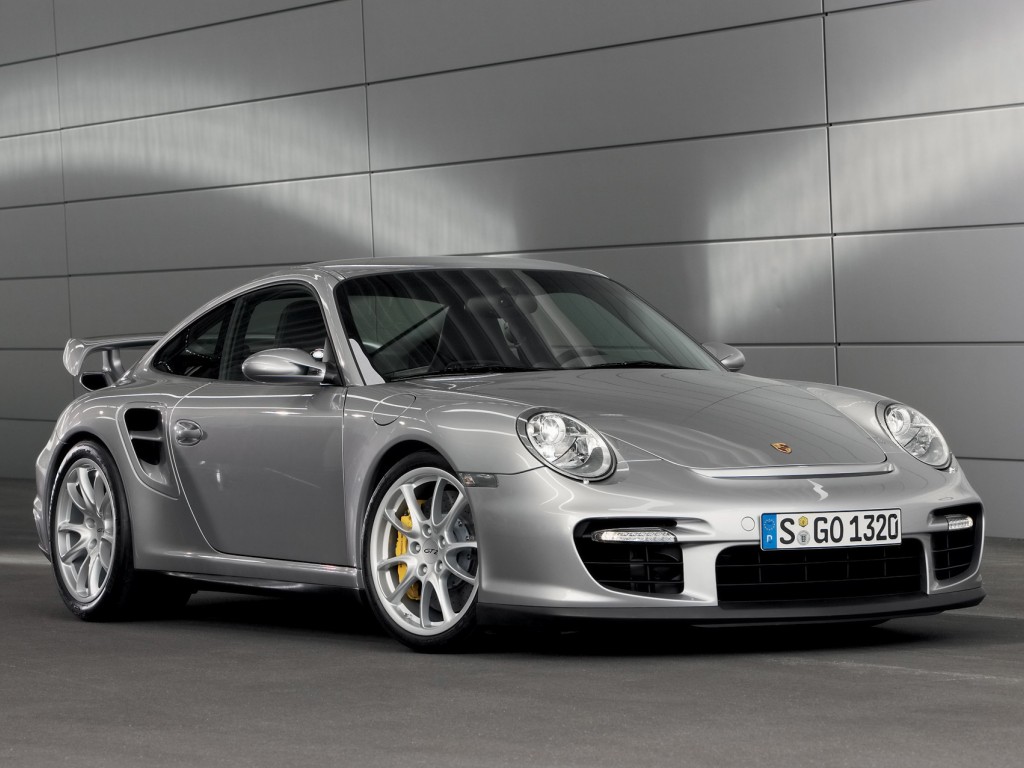
2010 New Porsche Sports Cars 911 GT3 at The Geneva

Stuttgart. Dr. Ing. h.c. F. Porsche AG, Stuttgart, is adding yet another new model to the second generation of the 911 model series: the new GT3 even more powerful, faster, and refined than its predecessor. In developing the most sporting and dynamic road-going 911 with a normal-aspiration power unit, Porsche has applied a wide range of know-how gained in motorsport. Indeed, this is precisely why the 2010 new Porsche 911 GT3 is truly impressive not only on the road, but also on the race track.
2010 Porsche Sports Cars 911 GT3
The 2010 new Porsche 911 GT3 is the latest evolution of an iconic sports car. Embodying the essence of more than 23,000 Porsche racing victories, the 911 GT3 is the ultimate integration of driver and car and arrives in the UK this autumn. The new 911 GT3 is making its world debut at the Geneva Motor Show on 3 March, with Europe-wide sales starting in May.
The Porsche 911 GT3 offers an even higher standard above all in two key areas: performance and driving dynamics. The proven six-cylinder naturally aspirated power unit now develops a maximum output of 435 hp (320 kW), up 20 hp over its predecessor. This results first and foremost from an increase in engine capacity by 200 cc to 3.8-litres and from improved cylinder head gas flow: now not only the intake, but for the first time also the exhaust camshafts, are adjusted by VarioCam.
A further important point is that, through its upgraded power and performance, the flat six 'boxer' engine also offers a significant increase in torque at medium engine speeds, a benefit of particular significance in everyday motoring. Clearly, this also means a further improvement in performance; the new Porsche 911 GT3 accelerates from a standstill to 62 mph (100 km/h) in 4.1 seconds and reaches 99 mph (160 km/h) in 8.2 seconds. Top speed is 194 mph.
The second emphasis in developing the Porsche 911 GT3 to an even higher standard was to further improve the car's driving dynamics. For the first time, the Porsche 911 GT3 comes with a particularly sporting variant of Porsche Stability Management (PSM), offering the facility to deactivate both Stability Control (SC) and Traction Control (TC) in separate steps. And to give the driver unrestricted, individual control over the driving dynamics of his car, these functions are not reactivated automatically even under the most extreme driving conditions, but only at the touch of a button.
The Porsche Active Suspension Management (PASM) fitted to the 911 GT3 has enabled Porsche engineers to make the springs and anti-roll bars stiffer yet again, thus ensuring even more precise handling in the PASM 'sports' mode. However, the PASM ensures appropriate ride comfort suitable for everyday use when in the 'normal' PASM mode. The Porsche 911 GT3 rides on new, lighter wheels in a racing-inspired design - with a centre locking nut - fitted with ultra-high performance (UHP) tyres. Tyre pressure monitoring is fitted as standard.
Making the car even more suitable for the race track, the new Porsche 911 GT3 will be available with the option of new and highly innovative Porsche Active Drivetrain Mount (PADM) engine mountings. These special engine mounts recognise a particularly sporting, race-like style of driving, making the normally 'elastic' engine mounts harder and particularly resistant. This retains all the motoring comfort of the GT3 in everyday traffic, while on the race track the effect of the mass forces coming from the engine is much reduced, particularly in fast bends and on winding tracks. Yet a further advantage is improved traction when accelerating from a standstill.
Another new feature is the optional lift system for the front axle which is able to increase the ground clearance of the car, at the touch of a button, for driving on bumpy surfaces or steep gradients - for example into an underground garage - by 30 millimetres (approx 1.2 inches).
The Euro base price of the new GT3 is Euro 98,100, in Germany the retail price including value-added tax and specific national features is Euro 116,947. In the USA the GT3 will be at the dealership in October at a price of USD 112,200 (MSRP without taxes).

Thursday, May 27, 2010

2010 Porsche Sports Cars 911 GT3 R Hybrid

Known as the 2010 Porsche 911 GT3 R Hybrid, the model hints at new hybrid technology that Porsche Sports Cars will use in its motorsport ventures. According to Porsche, the 911 GT3 R Hybrid will be used as a study to gather information about how hybrid drive will behave under a racing environment and will also help the German automaker study how it can be applied to its road cars.
2010 Porsche 911 GT3 R Hybrid
During Porsche's press conference here at the Geneva Motor Show, most of our attention was understandably on the 918 Spyder Concept, but the German automaker had several other significant debuts. One was the 911 GT3 R Hybrid, Porsche's first race car to feature electric power sourced from a duo of motors that send power to a generator attached the flywheel. Like many hybrid production cars, the motors are charged whenever the brakes are applied, and the driver can use the extra power for 6-8 seconds for overtaking.
Exactly 110 years after Ferdinand Porsche developed the world's first car with hybrid drive, the Lohner Porsche Semper Vivus, Dr. Ing. h.c. F. Porsche AG, Stuttgart, is once again taking up this visionary drive concept in production-based GT racing: During the Geneva Motor Show, a Porsche Sports Cars 911 GT3 R with innovative hybrid drive is making its debut, opening up a new chapter in the history of Porsche with more than 20,000 wins in 45 years scored by the extremely successful Porsche 911 in racing trim.
Unlike a conventional battery-electric hybrid system the Porsche 911 GT3 R uses a flywheel system, which gathers kinetic energy under braking to power two electric-motors that are mounted in a single assembly and are connected to the front wheel. After each boost of charge, the two motors provide 6 to 8 second jolts of power. The extra power is engaged by pressing a button on the steering wheel, providing up to 161-hp to the front wheels, assisting the 911 GT3 R Hybrid’s 480-hp 4.0L inline-6 that powers the two rear-wheels.
The innovative hybrid technology featured in the car has been developed especially for racing, standing out significantly in its configuration and components from conventional hybrid systems. In this case, electrical front axle drive with two electric motors developing 60 kW each supplements the 480-bhp four-litre flat-six at the rear of the 911 GT3 R Hybrid. A further significant point is that instead of the usual batteries in a hybrid road car, an electrical flywheel power generator fitted in the interior next to the driver delivers energy to the electric motors.
The flywheel generator itself is an electric motor with its rotor spinning at speeds of up to 40,000 rpm, storing energy mechanically as rotation energy. The flywheel generator is charged whenever the driver applies the brakes, with the two electric motors reversing their function on the front axle and acting themselves as generators. Then, whenever necessary, that is when accelerating out of a bend or when overtaking, the driver is able to call up extra energy from the charged flywheel generator, the flywheel being slowed down electromagnetically in the generator mode and thus supplying up to 120 kW to the two electric motors at the front from its kinetic energy.
This additional power is available to the driver after each charge process for approximately 6 - 8 seconds. Energy formerly converted - and thus wasted - into heat upon every application of the brakes, is now highly efficiently converted into additional drive power.
Depending on racing conditions, hybrid drive is used in this case not only for extra power, but also to save fuel. This again increases the efficiency and, accordingly, the performance of the 911 GT3 R Hybrid, for example by reducing the weight of the tank or making pitstops less frequent.
After its debut in Geneva the 911 GT3 R Hybrid will be tested in long-distance races on the Nürburgring. The highlight of this test programme will be the 24 Hours on the Nordschleife of Nürburgring on May 15th and 16th. The focus is not on the 911 GT3 R Hybrid winning the race, but rather serving as a spearhead in technology and a 'racing laboratory' providing know-how on the subsequent use of hybrid technology in road-going sports cars.
The 911 GT3 R Hybrid is a perfect example of the Porsche Intelligent Performance philosophy, a principle to be found in every Porsche: More power on less fuel, more efficiency and lower CO2 emissions - on the track and on the road.

PORSCHE 911 PICTURE


PORSCHE 911 PICTURE
PORSCHE 911 WALLPAPER

PORSCHE 911 PICTURE
PORSCHE 911 IMAGE

PORSCHE 911 PICTURE
PORSCHE 911 PICTURE

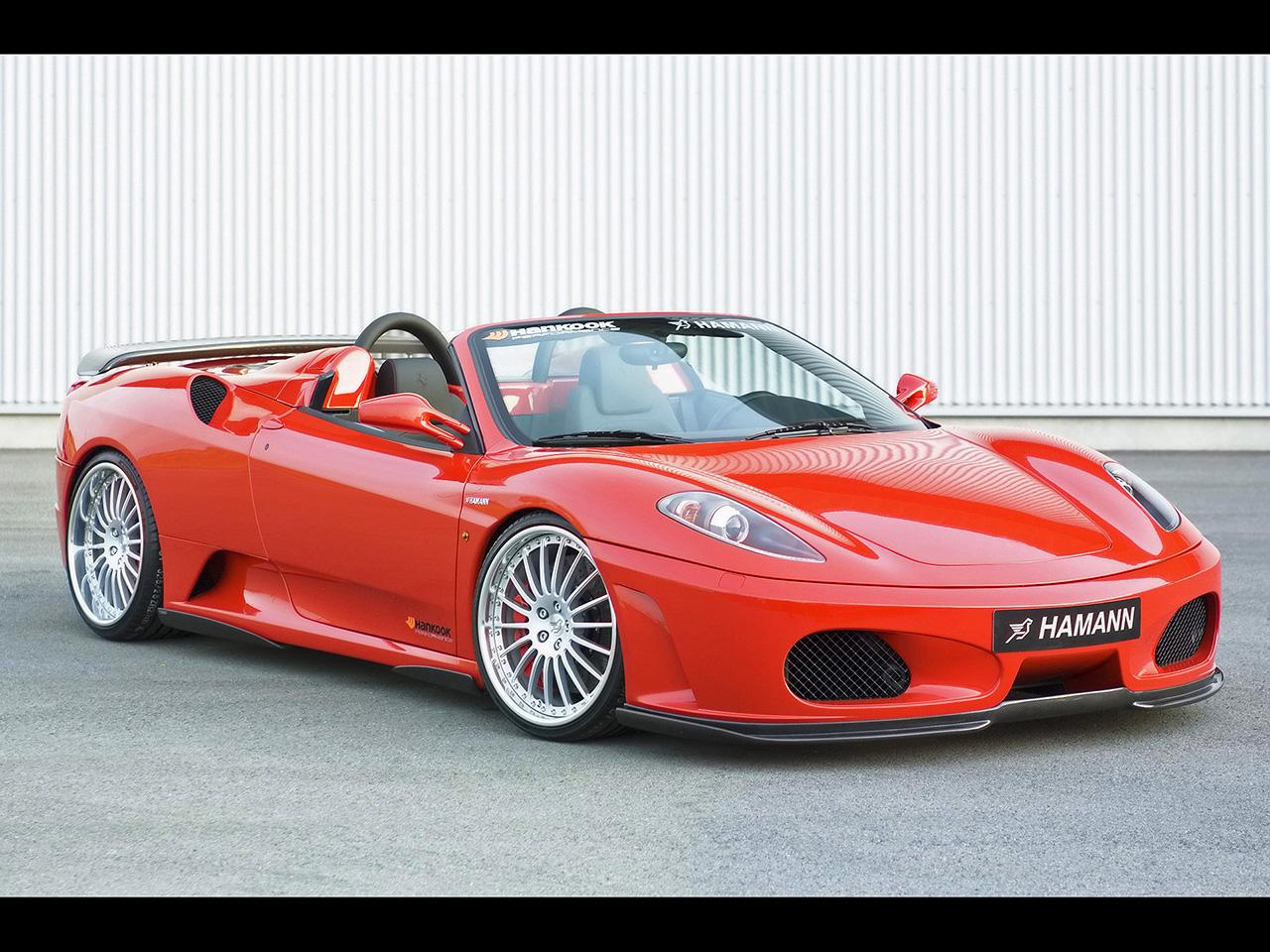
Ferrari F430 Spider

Ferrari F430 SpiderFerrari F430 Spider

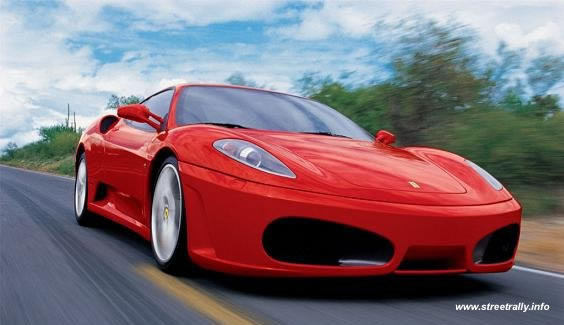
Ferrari F430 Sport CarsFerrari F430 Sport Cars

Ferrari F430 ScuderiaFerrari F430 Scuderia

Taeho Yoon's MUON concept car reads the occupant’s pulses


The brain child of Taeho Yoon, the concept vehicle is all about user comfort, ads more to driving experience and works as a depression reliever. Dubbed the Muon, the concept car is optimally customized for physical and psychological condition in the..

muon


The brain child of Taeho Yoon, the concept vehicle is all about user comfort, ads more to driving experience and works as a depression reliever. Dubbed the Muon, the concept car is optimally customized for physical and psychological condition in the first place. The concept car’s steering wheel features sensors that reads the pulses and plays the music on the internet as soon as the occupant touches it. Not only this, but the car has a mechanism that notes the feelings of the user and music that was played to repeat it in the future. Also, there is 100% personalized thermo sensor and heating wire in the seat to warm the body in the freezing cold weather. Vehicle takes care of the mood and e.g. a warm and fresh breeze of phytoncide is given off from the vent on the IP face to comfort occupant’s depressed soul. The interior of the vehicle is made from the complete environment-friendly material that gives one an impression to be in the greenhouse of the garden.


muon1muon2muon3


Via: Icsid


Metro car concept features organically shaped interior design


This organically- shaped interior design concept for the Metro car is created with the intention to provoke positive energy as well as inspiration and to add more to travel experience. With the functional sitting length is 6 meters per unit, the main.

metro car


This organically- shaped interior design concept for the Metro car is created with the intention to provoke positive energy as well as inspiration and to add more to travel experience. With the functional sitting length is 6 meters per unit, the main unit of this two sided sitting module which is made of highly reflective fiberglass surface which is styled in such a way to bring sense of movement and comfort to the space. The concept also features attractively shaped and functional handrails along the walls that replicate the shapes of the lighting fixtures and elliptical handrails above each sitting unit provide extra support.


metro carmetro car concept


Via: Vihrogone


Schmittenhöhebahn aerial tramway cabins get Porsche looks


Schmittenhöhebahn has a long history of more than four decades to carry millions of visitors in summers and winters from Zell am See, Austria, to Schmittenhöhe. But finally it’s a time to replace its two old red cabins with the latest generation..

cable cars for the schmittenhhebahn


Schmittenhöhebahn has a long history of more than four decades to carry millions of visitors in summers and winters from Zell am See, Austria, to Schmittenhöhe. But finally it’s a time to replace its two old red cabins with the latest generation of new cable cars. For that purpose, they partnered with Porsche Design Studio to develop the specifications for the fifth generation of Schmitten aerial tramway cabins thus giving the red cabins new Porsche looks.


The cable cars make a captivating impression with their compelling combination of design and function. Two new cabins with the h/b/l: 270/270/430-510 cm dimensions and increased capacity of 45 persons per cabin; 30 persons with bar installed can travel to Schmittenhöhe (2000 meters above sea-level) in just eight minutes.


The other design specifications include a strong focus on safety and a comfortable ride, full-length glazing, extra-wide doors and the latest safety features. And for those fun loving people, one of the cabins has a mobile bar and high-end multimedia system installed so that it can be used for private parties and company events.


cable cars for the schmittenhhebahn

cable cars for the schmittenhhebahn


Via: Porsche-design / Isr